

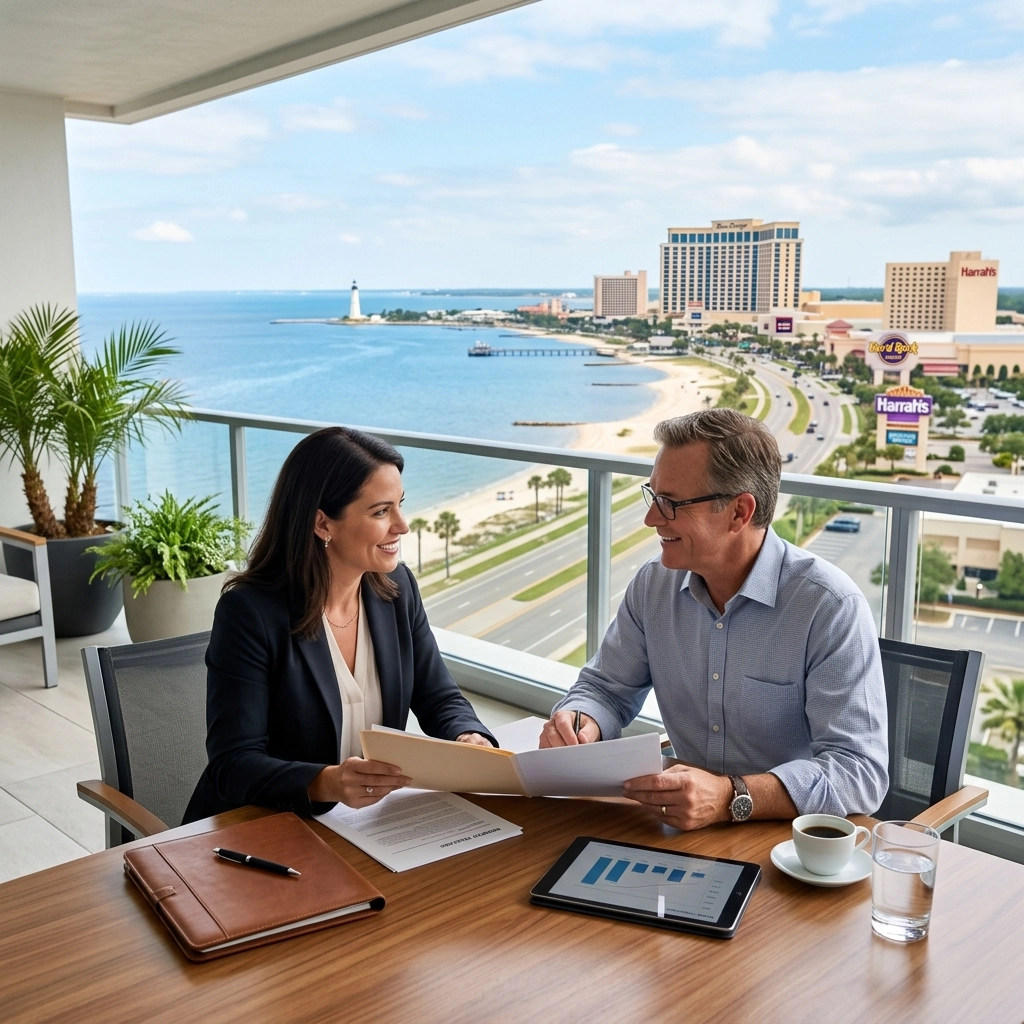
If you’re thinking about selling your business on the Mississippi Gulf Coast, you need to realize one thing immediately: the rules of the game change once you hit the shoreline.
The Biloxi and Gulfport markets don't operate like the rest of the state, and if you try to sell your company using a "standard" playbook, you’re going to leave significant money on the table.
Success in this region depends on understanding a very specific mix of federal influence, maritime logistics, and a tourism engine that never stops, and knowing exactly how to position your business to a buyer who might not even live in Mississippi.
Here’s the reality of the Gulf Coast market. Whether you’re running a defense contracting firm in Pascagoula, a hospitality-focused business in Biloxi, or a logistics company near the Port of Gulfport, your exit strategy requires a different level of precision.
Why the Gulf Coast Market Stands Alone
Most people look at the Mississippi Gulf Coast and see casinos and beaches. I see an economy driven by heavy industry, federal spending, and complex logistics.
When you look at the numbers, the region is heavily influenced by "anchor" institutions. We’re talking about Huntington Ingalls Industries, Keesler Air Force Base, the Stennis Space Center, and the Port of Gulfport. These aren't just employers; they are the suns that every other small business in the region orbits.
If your business provides services to these entities, your value isn't just in your revenue. It's in your contract durability.
Buyers in this market aren't just looking at your last three years of Profit & Loss statements. They are looking at your "program dependency." They want to know how long your contracts with the shipyard last or what your compliance record looks like for federal work.
In Biloxi and Gulfport, your business is often valued more on its stability and compliance than on its raw growth potential.

The Tourism and Hospitality Factor in Biloxi
If you own a business in the tourism or service sector, the narrative changes. Biloxi is the heart of Mississippi’s gaming and hospitality industry. This creates a high-velocity market where cash flow is king, but seasonality is the enemy.
I’ve seen owners struggle to sell because they couldn't explain the "ebbs and flows" of the Gulf Coast tourist season to an out-of-state buyer. To get the highest valuation, you have to prove that your business has "off-season" resilience.
When we work with hospitality owners at Biz Broker Mississippi, we focus on normalizing that cash flow. We show buyers the "year-round" reality, not just the peak summer or Cruisin’ The Coast numbers.
Maritime and Port Logistics: The Hidden Powerhouses
The Port of Gulfport and the industrial corridor in Pascagoula represent some of the most specialized business opportunities in the South.
If you’re selling a logistics, distribution, or maritime support company, your buyer likely isn't the guy down the street. It’s likely a strategic acquirer from New Orleans, Mobile, or even a national firm looking to get a foothold in the Mississippi maritime corridor.
Specific factors that drive value in Gulf Coast maritime businesses include:
- Proximity to Port Infrastructure: Is your facility owned or leased? How close are you to the deep-water channels?
- Specialized Workforce: Do you have a team with the certifications required to work on federal or maritime projects?
- Disaster Preparedness: Let’s be real, buyers ask about hurricanes. Having a documented, battle-tested disaster recovery plan actually adds value to your business.
Understanding these regional market conditions is the difference between a deal that closes and one that falls apart during due diligence.
Why You Don't Need a "Local" City Broker
There is a common misconception that you need a broker with an office in your specific city to sell your business. That’s simply not true.
In fact, hiring a broker specifically because they are "local" can sometimes hurt your chances of a successful sale. Why? Because the most qualified buyers for a $2 million or $10 million business in Gulfport often come from outside the immediate market.
Confidentiality is the most important asset you have during a sale.
If everyone in town knows your business is for sale, your employees get nervous and your competitors start circling. Working with a regional firm like Vision Fox Business Advisors or an experienced advisor who covers the entire state allows you to maintain a "buffer" of confidentiality.
We connect sellers with qualified buyers across the region and the country, ensuring that the word doesn't get out on the street until the papers are signed.

The 6 to 12 Month Countdown
Selling a business on the Coast isn't an overnight process. On average, you should expect a timeline of 6 to 12 months.
Here is why the timeline looks like that:
- Valuation (Month 1): We need to establish a defensible range. This isn't a guess; it's a data-driven look at your assets, cash flow, and market position. You can start this process by requesting a valuation request to see where you stand.
- Marketing and Confidentiality (Months 2-4): We create a "Blind Profile" that highlights the strengths of your business without giving away its name.
- Buyer Screening (Months 4-6): We vet every single person who signs an NDA. We make sure they have the money and the experience to actually run your company.
- Due Diligence (Months 6-9): This is the "proctology exam" of the business world. The buyer will look at every tax return, contract, and employee file.
- Closing (Months 9-12): Legal work, lease transfers, and final signatures.
If you have federal contracts or port-related leases, that due diligence period can take longer because of "novation" requirements, the process of legally transferring a contract from one party to another.
Preparing Your Business for Sale: The Checklist
If you want to sell in the next year, you need to start cleaning house today.
First, get your books in order. If you’re running personal expenses through the business (which many owners do), stop. It makes the valuation process much more difficult and can flag issues for a buyer's bank.
Second, diversify your customer base. If 70% of your revenue comes from one single contract at Ingalls or Keesler, you have "concentration risk." A buyer will see that as a massive gamble. Try to spread that revenue around before you hit the market.
Third, document your processes. Can the business run for two weeks without you there? If the answer is no, you don't have a business to sell; you have a job. Buyers want a machine that works, not a business that relies on the owner’s 24/7 presence.
Fourth, understand your lease. If your business relies on a specific location near the Port or on Highway 90, make sure your lease is transferable or has enough time left to satisfy a lender.

The Reality of Buyer Expectations
Today’s buyers are smarter and better funded than ever. They are often backed by private equity or are "search fund" entrepreneurs with MBAs.
They aren't buying your "potential." They are buying your historical performance.
Here's the thing: A buyer doesn't care what the business could do under their leadership. They are paying you for what it did do under yours.
When we represent a seller at Gulf Coast Business Broker, we make sure the "story" of the business matches the "math" of the business. If those two things don't align, the deal will fail during the bank's underwriting process.
Final Thoughts on the Gulf Coast Market
Selling your business in Biloxi, Gulfport, or Pascagoula is a major life event. You’ve spent years: maybe decades: building something of value.
The Gulf Coast is growing, and there is an appetite for well-run, profitable companies in this region. Whether it’s the expansion of the Port or the continued growth of the defense sector, the tailwinds are in your favor.
But don't go it alone. The complexities of maritime law, federal contracts, and regional tourism require an advisor who knows how to navigate these waters. You need someone who can look at your business with the confidence of an insider and the objectivity of a professional.
Don't wait until you're burned out to start thinking about your exit.
The best time to prepare for a sale is two years before you actually want to leave. The second best time is today.
To learn more about our company, visit https://visionfox.com/.
Are you curious about what your Mississippi Gulf Coast business is worth in today's market? Get started with a professional valuation request and take the first step toward a successful exit.